Short-Term Rental and Housing Community 2026: Can They Ban It?
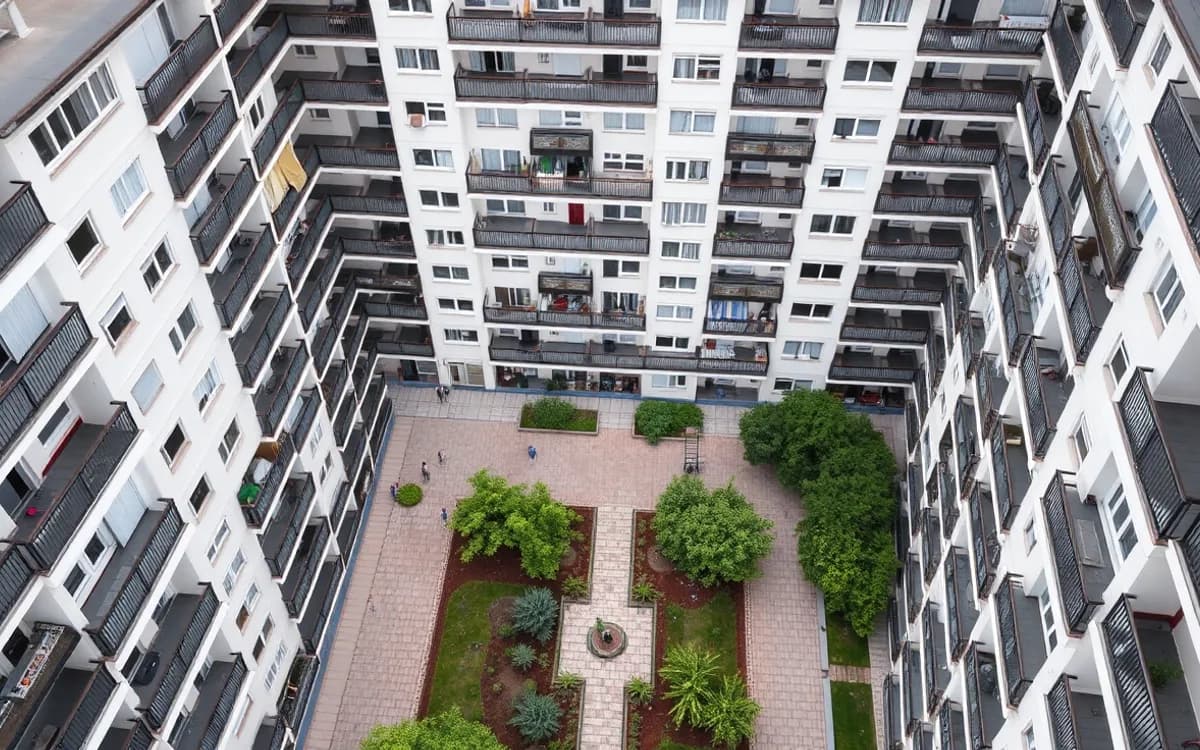
A housing community cannot ban Airbnb but can raise costs and trigger inspections. Polish Supreme Court case law, host rights and how to neutralise the resolution.
READY-MADE STR DOCUMENTATION
Get compliant in 2 evenings.
CWTON registration without the stress.
Instead of writing documents from scratch (40+ hours) or paying a lawyer (£1,500+), download ready-made templates aligned with Polish STR law and CWTON requirements.
Short-Term Rental and the Homeowners' Association - Can They Ban It?
Running an Airbnb in an apartment building? Have a unit in a tenement house and rent it out to tourists? Sooner or later you'll hear from neighbors or the homeowners' association board: "We'll put a stop to this." Maybe you've already received a letter threatening that the wspólnota mieszkaniowa (homeowners' association) will ban short-term rental. This is one of the most common fears among hosts who rent apartments in multi-family buildings. And let me say right away - as of today, the homeowners' association cannot simply ban your short-term rental. But the matter isn't as simple as it might seem, and from 2029 the rules of the game may change dramatically. In this article, I explain exactly where you stand legally, what the association can do, what it cannot, and how to survive running an Airbnb in an apartment building without going to war with your neighbors.
Key Takeaways
- A homeowners' association currently cannot ban short-term rental - this has been confirmed by Supreme Court rulings
- The association can, however, enforce building rules, quiet hours, and regulations for using common areas
- From 2029, municipalities will be able to designate zones where short-term rental is prohibited - this will change the situation in apartment buildings
- A spółdzielnia mieszkaniowa (housing cooperative) has broader powers than a homeowners' association and can impose stricter restrictions
- Good relations with neighbors are the best protection against conflicts - and against future regulations
Can a homeowners' association ban Airbnb?
Let's start with the most important question: can a homeowners' association pass a resolution banning short-term rental in the building? The answer as of today is: no.
The foundation is property rights. If you own a residential unit, you have the right to dispose of it - including renting it out on a short-term basis. The homeowners' association does not have the authority to interfere with how you use your property, as long as you don't violate the rights of other residents or the rules for using common property.
This isn't just my interpretation. The Supreme Court has confirmed this multiple times.
Key Supreme Court rulings
The issue of short-term rental in the context of homeowners' associations has been the subject of several significant court rulings. It's worth knowing them, as they form your main line of defense.
Supreme Court resolution from 2019
The Supreme Court examined a case in which a homeowners' association passed a resolution banning short-term rental in the building. The apartment owner challenged the resolution. The Supreme Court ruled that a homeowners' association is not authorized to prohibit property owners from renting out their units, as this would constitute an impermissible interference with property rights protected by the Polish Constitution (Article 64) and the Civil Code.
The Court emphasized that a homeowners' association manages the common property - stairwells, elevators, the roof, basements - but has no authority over what an owner does within their own unit, as long as they don't violate the rights of co-owners of common property.
Appellate court rulings
The Supreme Court's line of reasoning has been confirmed by numerous appellate court rulings. Courts consistently overturn resolutions of homeowners' associations attempting to ban short-term rental. The reasoning is similar: property rights cannot be restricted by a resolution of the association, and short-term rental in itself does not constitute a violation of rules for using common property.
An important caveat: courts simultaneously emphasize that if short-term rental leads to specific violations - for example, noise, damage to common areas, or security threats - the association has the right to take appropriate action. It cannot ban the rental itself, but it can respond to its negative effects.
What CAN a homeowners' association do?
The fact that the association cannot ban short-term rental doesn't mean it's powerless. It has several tools at its disposal that can significantly impact your business operations.
Building rules and regulations
The association has full authority to adopt rules and regulations regarding the use of common property. These rules may specify:
- Quiet hours (most commonly 10:00 PM - 6:00 AM)
- Rules for using stairwells, elevators, basements, and other common areas
- Smoking ban in common areas
- Parking rules
- Waste disposal and recycling rules
- Noise restrictions and party rules
These rules apply to everyone - both permanent residents and your guests. And here's the key: if your guests violate the rules, the association has a basis for action. Not against the rental itself, but against specific violations.
That's why it's so important that you have your own solid apartment house rules that inform guests about the regulations in the building. This is your first line of defense.
Complaints about disturbing the peace
Any resident - not just the association board - can report a violation of quiet hours or disturbance of peace. If your guests regularly throw parties, make noise in the stairwell at three in the morning, or leave garbage by the door, neighbors can:
- Report the matter to the police (a minor offense under Article 51 of the Kodeks wykroczeń (Code of Minor Offenses) - disturbing the peace)
- File an official complaint with the association board
- In extreme cases - file a civil lawsuit to cease the disturbances
Repeated, documented complaints can form the basis for further legal action. Not to ban the rental, but to impose an obligation to stop specific nuisances.
Increasing common area fees
This is a tool that some associations are increasingly reaching for. The argument goes like this: short-term rental generates increased wear on common areas - more frequent use of elevators, stairways, and intercoms. Some associations try to pass resolutions for higher maintenance fees for units used for short-term rental.
The legality of such resolutions is debatable. Courts approach them cautiously - the increase must be justified by actual, documented costs, and not serve as a form of penalty for operating a rental.
How does 2026 change the situation?
The entry into force of regulations implementing EU Regulation 2024/1028 and the obligation to register in CWTON (Central Register of Tourist Accommodation) (new short-term rental regulations 2026) doesn't give homeowners' associations new powers to ban rental. But it changes the context.
CWTON registration and the association
From May 20, 2026, every host must register in CWTON (Central Register of Tourist Accommodation). This is an obligation imposed by the state, independent of the association. But the association may expect you to inform them about operating a business in the building - not because you need to ask for permission, but because it's good practice and builds trust.
CWTON registration is public, which means your neighbors and the association board can easily check whether you're running a legal rental. Paradoxically, having a CWTON registration number works in your favor - it shows that you operate in compliance with the law and meet standards.
Required documentation
New regulations require hosts to maintain specific documentation: house rules, fire safety declaration, guest register. All of these are elements that in practice help minimize conflicts with neighbors. A professional host with complete documentation is less of a problem for the association than someone renting "off the books."
Restriction zones from 2029 - the real game-changer
If you operate a short-term rental in an apartment building, the most important date on your calendar isn't May 2026, but 2029. From that point, municipalities will gain the right to designate zones where short-term rental is prohibited or restricted.
What does this mean for hosts in apartment buildings?
A municipality will be able to pass a resolution under which short-term rental will be banned or restricted in a specific area - for example, in the city center, a historic district, or a particular neighborhood. This is a completely different mechanism than a homeowners' association resolution. A municipal council resolution has the force of local law.
Imagine this scenario: you operate an apartment in the center of Krakow, in the Kazimierz district. The homeowners' association can't ban your rental - but the Krakow city council can. And with binding force not just for you, but for all hosts in the area.
How to prepare?
Restriction zones are a matter of several years away, but it's worth starting now:
- Monitor discussions in your municipal council - is your city considering restriction zones?
- Participate in public consultations - you have the right to speak up before a zone is established
- Build good relationships with neighbors - because the most effective argument for restriction zones is resident complaints
- Diversify your locations - if you have multiple properties, don't put all your eggs in one neighborhood
- Be an exemplary host - because a professionally run short-term rental is the best argument against bans
Homeowners' association vs. housing cooperative - the key difference
Many hosts confuse these two concepts, but the difference is fundamental and may determine whether you can operate a short-term rental at all.
Wspólnota mieszkaniowa (homeowners' association)
A wspólnota mieszkaniowa (homeowners' association) is a form of property management where each unit owner is a co-owner of the common property. The key point: you own your apartment. You have full property rights, and the association manages only the common areas. That's why the association cannot ban your rental - because it would interfere with your property rights.
Spółdzielnia mieszkaniowa (housing cooperative)
In a spółdzielnia (housing cooperative), the situation looks completely different. The cooperative owns the building, and you have a right to the unit - either spółdzielcze własnościowe (cooperative ownership right) or spółdzielcze lokatorskie (cooperative tenancy right). This is not full ownership as understood by the Civil Code.
A housing cooperative can adopt statutes or regulations that restrict or prohibit short-term rental. And such resolutions may be considered legally effective, because:
- The cooperative owns the building, giving it broader powers to set rules
- The cooperative's statutes are a binding document for all members
- Cooperative rights to a unit (especially tenancy rights) are limited rights, not full ownership
Before you start short-term rental in a cooperative apartment, be sure to check the cooperative's statutes. Look for provisions regarding the designated use of units, running a business in the building, and renting out units. If the statutes prohibit rental or require board approval - you must comply.
What to do if you have cooperative ownership rights?
Spółdzielcze własnościowe (cooperative ownership right) is stronger than tenancy right - it's a limited real right that you can sell, inherit, or mortgage. But it's still not full ownership. Recommendation: consider converting to odrębna własność (separate ownership) if possible, which will give you full property rights and position you as an owner in a homeowners' association rather than a member of a cooperative.
What to do when the association threatens legal action?
Getting letters from the building manager? Neighbors threatening lawsuits? The association passed a resolution banning Airbnb in the building? Here's a concrete action plan.
Step 1: Stay calm and document everything
Don't react emotionally. Collect all letters, emails, and text messages. Document every situation where the association or neighbors try to limit your right to rent. These documents may be needed if the case goes to court.
Step 2: Check the legal basis
If the association passed a resolution, obtain its text. Check whether it concerns a rental ban (which is probably invalid) or regulation of common area usage (which may be legitimate). These are two different things and require different responses.
Step 3: Respond in writing
Write a letter to the association board in which you:
- Confirm that you are the owner of the unit and operate a legal short-term rental
- Cite Supreme Court rulings regarding the inadmissibility of rental bans by homeowners' associations
- Declare your willingness to cooperate in minimizing any disturbances
- Inform them about your house rules and CWTON (Central Register of Tourist Accommodation) registration (if you already have it)
Step 4: Challenge the resolution
If the association passed a resolution banning short-term rental, you have the right to challenge it in court under Article 25 of the ustawa o własności lokali (Act on Ownership of Premises). You have 6 weeks from the date the resolution was passed (or from the date you learned about it). The court may overturn the resolution if it violates your legitimate interests as a unit owner.
Step 5: Consult a lawyer
If the matter gets complicated - for example, the association files a lawsuit, threatens damage claims, or tries to obstruct your use of the property - consult a lawyer specializing in real estate law. Consultation fees are typically 200-500 PLN, and they could save you significantly more.
Practical scenarios and how to resolve them
Theory is one thing, but what do you do when on Monday morning a letter from the building manager is waiting for you? Here are the most common scenarios and specific solutions.
Scenario 1: A neighbor complains about guest noise
This is the most common problem. Your guests returned from an evening out at one in the morning, talked loudly in the stairwell, and slammed doors. The downstairs neighbor didn't sleep and is furious.
What you do:
- Apologize to the neighbor in person - don't dismiss the problem
- Contact your guests and remind them about quiet hours
- Add a clear quiet hours reminder in your welcome message
- Consider installing a noise sensor (e.g., Minut) - a device that measures decibel levels and sends you an alert when it gets too loud
- Leave the neighbor your phone number - let them call you, not the police
Scenario 2: The association board sends a letter about "illegal activity"
You receive an official letter from the association board or building manager, stating that operating a short-term rental is "inconsistent with the unit's designated purpose" and demanding you stop.
What you do:
- Respond in writing, citing property rights and Supreme Court rulings
- Attach information about your house rules and CWTON registration
- Propose a meeting to discuss any issues and work out solutions
- Don't ignore the letter - no response is interpreted as an admission
Scenario 3: The association votes to ban short-term rental
At a homeowners' meeting, residents voted to pass a resolution banning short-term rental in the building.
What you do:
- Check whether the resolution was properly adopted (required majority, proper notification)
- Within 6 weeks, challenge the resolution in court under Article 25 of the Act on Ownership of Premises
- Until the court rules, the resolution is formally in effect, but the court can suspend its enforcement
- Gather evidence that your rental doesn't cause disturbances (guest reviews, absence of complaints, noise monitoring)
Scenario 4: Neighbors deliberately obstruct rental operations
It happens: a neighbor blocks the intercom, removes information signs, or intimidates guests in the stairwell. It's not common, but it occurs.
What you do:
- Document every incident (photos, security camera footage, guest statements)
- Report the matter to the association board in writing
- In extreme cases - call the police or file a report of a minor offense
- Consider installing an electronic lock instead of traditional keys - this eliminates the intercom problem
How to maintain good relationships with neighbors - a practical guide
The best legal strategy is one you never have to use. Good relationships with neighbors are worth more than the best lawyer. Here are proven methods.
Introduce yourself and inform
Before you start renting, talk to your closest neighbors. Let them know you'll be doing short-term rental, give them your phone number, and assure them that if there are problems - you'll respond immediately. This one conversation can prevent months of conflicts.
Give neighbors a contact card
Leave your neighbors (especially those directly adjacent) a note with the following information:
- Your name and phone number
- Information that you operate a legal rental with a CWTON number
- A request to contact you directly if any problems arise
Neighbors who can call you directly are far less likely to call the police or file complaints with the association board.
Keep common areas clean
Your guests use the stairwell, elevator, and trash room. Make sure that:
- Guests know where to dispose of garbage and how to sort it
- Wheeled suitcases aren't rolled through the stairwell at six in the morning (if possible, provide guests with quiet check-in instructions)
- Guests don't leave their belongings in common areas
- The building's front door is always locked
Respond immediately to problems
When a neighbor calls to say your guests are being noisy - respond within minutes. Call the guests, and if they don't answer - go in person. A quick response shows neighbors that you're a responsible host who cares about maintaining good relations.
Consider a small gesture
Some hosts leave neighbors small holiday gifts, chocolates, or simply thank them for their patience. It's not mandatory, but it builds goodwill. A neighbor who likes you personally is far less inclined to file complaints.
Set limits in your listing
Most platforms allow you to define the guest profile. Consider:
- Requiring positive reviews from previous hosts
- Explicitly prohibiting parties in the listing description
- Setting a guest limit consistent with the number of beds
- Clear check-in/check-out rules that account for quiet hours
Frequently Asked Questions
Can a homeowners' association pass a resolution banning Airbnb?
The association can technically pass such a resolution, but it will likely be invalid. Supreme Court rulings clearly indicate that a short-term rental ban constitutes impermissible interference with property rights. As a unit owner, you have the right to challenge such a resolution in court within 6 weeks, and there is a very high probability that the court will overturn it.
What if neighbors complain about my guests?
Take every complaint seriously. Contact your guests, remind them of the rules, and apologize to the neighbors. Ensure you have solid house rules, consider a noise sensor, and leave neighbors your phone number. Repeated, documented complaints can form the basis for damage claims - not for the rental itself, but for the specific disturbances it causes.
Can a housing cooperative ban rental?
Yes - a spółdzielnia mieszkaniowa (housing cooperative) has significantly broader powers than a homeowners' association. The cooperative owns the building, and you only have a right to the unit (cooperative ownership or tenancy). The cooperative's statutes can contain provisions restricting or prohibiting short-term rental. Before starting rental, be sure to check your cooperative's statutes.
How will the 2029 restriction zones affect rental in apartment buildings?
From 2029, municipalities will be able to designate zones where short-term rental is prohibited or restricted. This mechanism can particularly affect multi-family buildings in city centers - the typical Airbnb locations. A municipal council resolution has the force of local law and is binding regardless of the association's or owner's position. Monitor your municipal council's work and participate in public consultations to have influence over the shape of regulations.
Do I have to inform the association about CWTON registration?
The regulations don't impose an obligation on you to inform the association about CWTON (Central Register of Tourist Accommodation) registration. Registration concerns the relationship between the host and the registration authority. However, proactively informing the association about your CWTON number is good practice - it shows that you operate legally and professionally, which builds trust and reduces the risk of conflicts.
Summary
Short-term rental in a multi-family building is a challenge, but not an unsolvable problem. Currently, the law is on your side - the association cannot ban rental, and Supreme Court rulings are clear. But the law isn't everything. Good relationships with neighbors, a professional approach to guests, and complete documentation are the foundations of running your business in peace.
From 2029, the landscape may change with restriction zones designated by municipalities. The best strategy for the future? Be a host that nobody complains about. Solid house rules, quick response to problems, and transparent communication with the association - that's your shield and sword at the same time.
Need professional house rules that account for homeowners' association requirements and minimize conflicts with neighbors? With the HostReady Package you receive a complete set of documents - including house rules, fire safety declaration, and guest register template - ready to use from day one.